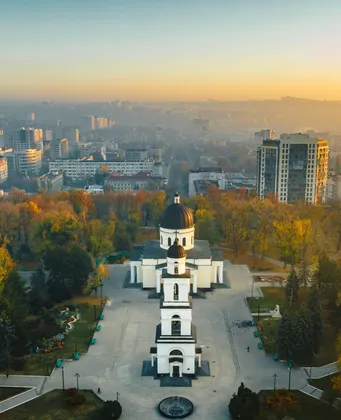
Proximity to Europe
One hour ahead of the Netherlands, fully overlapping your workday.
WHY MOLDOVA
A country building on a strong technical tradition, and a developer community that's adapting faster than most.
WHY IT WORKS
Collaboration with Moldovan developers doesn't feel offshore. It feels like an extension of your existing team, because the overlap in timezone, culture, and working norms is real.
One hour ahead of the Netherlands, fully overlapping your workday.
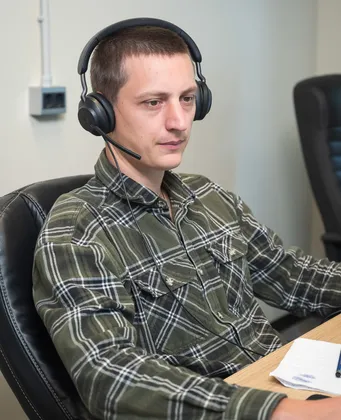
Developers join your workflows, not a separate track. They become part of how your product gets built.
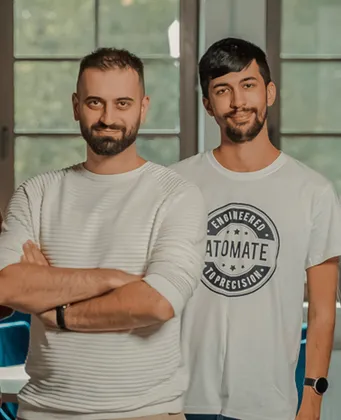
English-speaking, EU-aligned in work culture. Daily standups, code reviews, sprint planning, all natural.
THE REALITY
Adapt quickly to new tools, models, and workflows
Learn continuously in an environment that changes weekly
Work in evolving environments where the toolchain shifts under them
WHY MOLDOVA
01
A strong tradition in mathematics and computer science education. Developers here solve hard problems from the start.
02
Trained in environments with fewer resources, which builds the instinct to figure things out independently.
03
Comfortable working with EU-based teams. English proficiency, European timezone, familiar workflows.
04
A community actively tracking and adopting AI tooling, not waiting to be told to.
Q&A
Yes. Moldova has been an official EU candidate country since June 2022, and formal accession negotiations opened in June 2024; the country is anchoring itself politically and economically in Europe. The IT sector operates from Chișinău within a regulated, predictable framework (Moldova IT Park). As with any distributed team, business-continuity measures are a standard part of the setup.
The sector is compact but has professionalised fast, with Moldova IT Park at its core: 2,725 resident companies from 44 countries and around 26,000 employees within the park, together generating roughly $1 billion in revenue in 2025. The park runs a flat 7% tax on revenue, guaranteed through 2035 (source: MoldPres, Feb 2026, figures for 2025).
Yes, English proficiency in Chișinău is strong and sits above the national average. The IT sector concentrates in this city, where standups, code reviews and documentation run in English by default. Day-to-day collaboration with a Dutch or European team therefore runs smoothly in English.
Moldova is one hour ahead of the Netherlands year-round (EET/EEST), so your working days overlap almost entirely. Flight time from Amsterdam is about 3 hours. Moldovan developers with a biometric passport have travelled visa-free to the Netherlands and most EU countries for short visits since 2014.